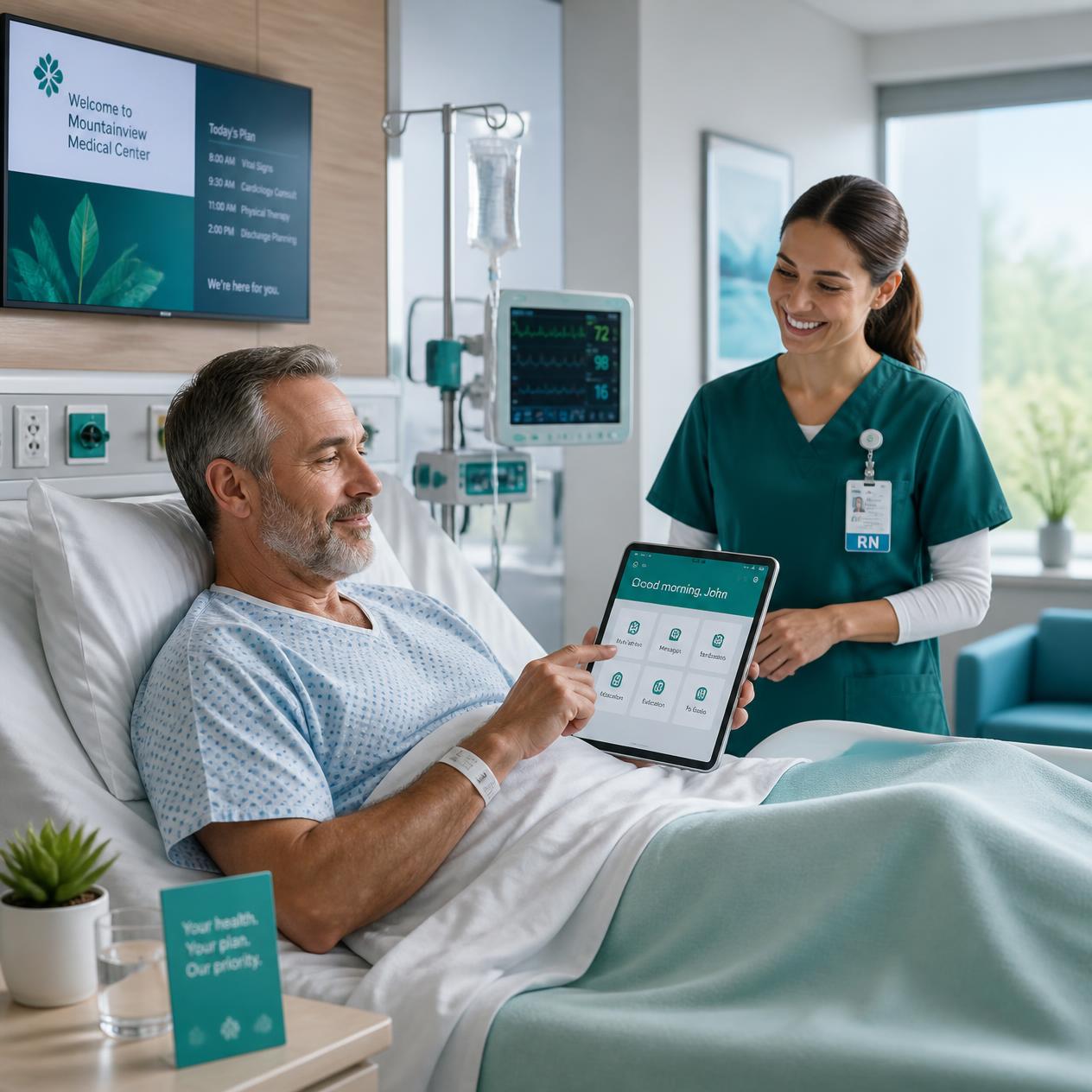
Private hospital groups across South Africa are abandoning traditional paper-based meal ordering processes in favour of digital bedside meal ordering systems. This shift addresses critical operational challenges whilst improving patient safety outcomes and dietary compliance rates.
The Compliance Crisis in Traditional Meal Ordering
Paper-based meal ordering systems create significant compliance gaps. Handwritten orders are frequently illegible, leading to incorrect meals reaching patients with specific dietary restrictions. Diabetic patients receive high-sugar desserts. Patients with renal conditions get high-sodium meals. These errors compromise patient safety and extend recovery times.
Hospital meal compliance software eliminates these risks through automated dietary restriction checking. The system prevents incompatible meal selections before orders reach the kitchen. Nursing staff no longer rely on manual cross-referencing of dietary requirements against meal choices.
Operational Efficiency Gains
Digital hospital catering platforms reduce meal service time by 35-40%. Traditional systems require nurses to collect paper forms, manually consolidate orders, and physically deliver consolidated lists to kitchen staff. This process consumes valuable nursing time and delays meal service.
A patient meal ordering app South Africa hospitals are implementing streamlines this entire workflow. Patients place orders directly through bedside tablets. Orders flow automatically to kitchen systems with real-time dietary restriction validation. Kitchen staff receive consolidated, accurate orders immediately.
Real-World Implementation Results
Netcare Milpark Hospital implemented a bedside meal ordering system South Africa across their cardiac units in 2023. Results showed 42% reduction in meal service errors, 28% faster meal rounds, and 89% patient satisfaction scores for meal accuracy. Most significantly, dietary compliance incidents dropped to zero over the six-month measurement period.
The hospital's procurement team initially questioned the ROI of digital transformation. However, cost savings emerged from reduced meal waste (patients receive exactly what they order), eliminated reprinting of menus, and freed nursing capacity for direct patient care.
Patient Safety Through Digital Validation
The most compelling reason for switching to digital systems is patient safety improvement. Traditional paper systems rely on human memory and manual checking for dietary restrictions. Busy nursing staff managing multiple patients can overlook critical dietary requirements.
Modern hospital catering software South Africa includes built-in clinical decision support. The system automatically flags potential dietary conflicts before meal preparation begins. A patient with diagnosed coeliac disease cannot accidentally order gluten-containing meals. Patients on fluid restrictions receive appropriate portion guidance.
This automated validation removes human error from the dietary compliance equation whilst maintaining the personal choice patients value during recovery.
Financial Justification for Procurement Teams
Private hospital groups operating under margin pressure require clear financial justification for technology investments. Bedside meal ordering systems deliver measurable ROI through several mechanisms:
- Reduced meal waste through accurate ordering (15-20% food cost savings)
- Eliminated paper menu printing and distribution costs
- Faster meal service reduces nursing overtime requirements
- Improved patient satisfaction scores support higher reimbursement rates
- Reduced dietary incident investigation costs and potential litigation exposure
Most importantly, the best hospital catering software South Africa solutions integrate with existing hospital information systems. This integration eliminates duplicate data entry whilst ensuring dietary restrictions flow automatically from clinical records to meal ordering systems.
Implementation Considerations
Successful digital transformation requires careful vendor selection and phased implementation. South Africa's digital hospital catering platform options vary significantly in clinical integration capabilities and local support quality.
Key evaluation criteria include real-time dietary restriction validation, integration with existing HMS/PMS systems, offline capability during network outages, and demonstrated compliance with South African healthcare regulations.
Staff training remains critical. Nursing teams need confidence in digital systems before patient-facing deployment. Kitchen staff require training on digital order management and real-time inventory integration.
Future-Proofing Hospital Catering Operations
Digital meal ordering systems provide the foundation for advanced catering analytics. Hospital administrators gain visibility into meal preference trends, dietary compliance patterns, and operational efficiency metrics previously unavailable through paper systems.
This data supports evidence-based menu planning, staffing optimisation, and inventory management. Hospitals can identify peak ordering times, popular menu items, and dietary restriction prevalence across patient populations.
Ready to explore how a patient meal ordering system South Africa can transform your hospital's catering operations? Book a MediCater demo to see real-time dietary compliance validation, automated order consolidation, and integrated reporting capabilities. Our implementation team will demonstrate ROI calculations specific to your patient volumes and current operational costs. Contact us today to schedule your personalised demonstration.